
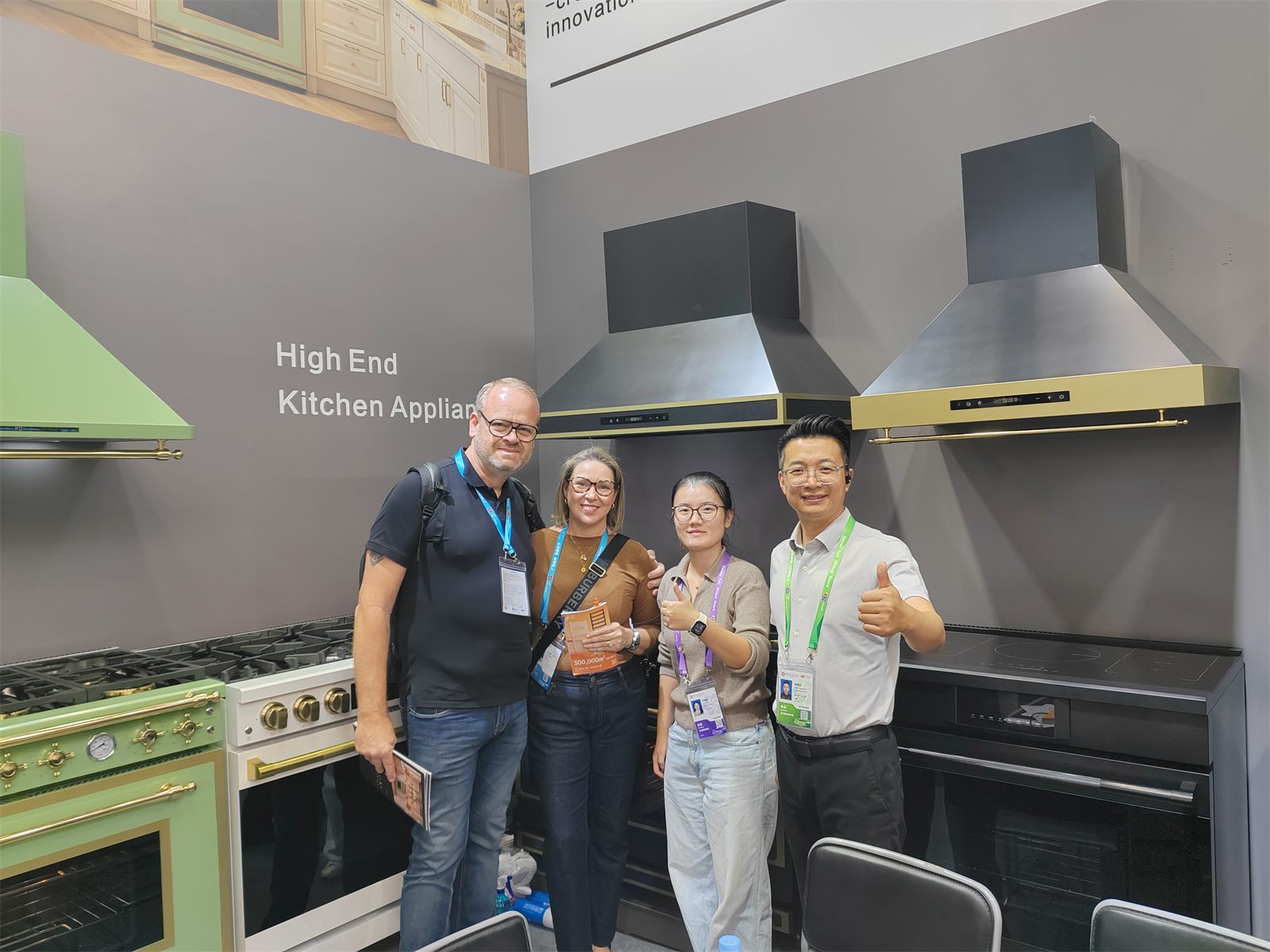
Short answer first: the 140th Canton Fair closed on 4 November 2026 with 352,000 overseas buyers from 219 countries, 12.2% more than last autumn and a record; intended export orders on site reached USD 26.75 bn. For a buyer of built-in cooking equipment, the number that matters is not the total but who came: EU buyer attendance rose 38.2%, US 22.2%, and Belt-and-Road markets 16.6%, which matches what we saw at our own booth in the kitchen-appliance hall.
The 140th Canton Fair ran from 15 October to 4 November 2026 in three phases, in the year the fair marked its 70th anniversary. For kitchen appliance sourcing, the closing numbers are worth reading line by line, because they describe what buyers now expect rather than how big the show was.
352,000 overseas buyers from 219 countries and regions attended, up 12.2% year on year and a record. On-site intended export deals reached USD 26.75 billion, across 32,000 exhibitors and 4.88 million exhibits. A China gas range factory reads one number behind those totals: European buyers up 38.2%, US buyers 22.2%.
The mix moved as much as the volume: new products 23.2% of exhibits, green products 26%, and 64% of exhibitors reporting industrial internet or AI in operations. Speaking as a China gas range factory that shows ranges and hoods every session, the visible change was on the buyer side - more drawings, fewer brochures.
The four questions we heard most were practical: whether a 48 inch body can take a griddle, whether the same cabinet converts from gas to dual fuel, what gas type and regulator the destination market uses, and which certification files can be handed over. Those are the real currency of kitchen appliance sourcing, ahead of unit price.
The lesson for a China gas range factory is that buyers compare platform depth, not single models: do 24, 30, 36 and 48 inch bodies share burners, controls and spares, and are hoods sized to match. A supplier that answers yes wins the second order; one that offers ten unrelated models usually does not.
Our own stand was the practical version of that: one platform from 24 to 48 inches, hoods at 630 to 980 CFM with a Ø180 mm duct and 4000K LED light, and a sample built on the same line as the production units. Colleagues from the Shengzhou plant answered gas, regulator and certification questions on the spot instead of promising an email later.
One more service worth knowing about, because it came up at the booth more often than price: supply-chain integration. Many buyers now assemble a full kitchen per project — ranges, hoods, hobs, ovens, sinks, and small accessories — from four or five vendors. We consolidate that into one purchase order, one specification sheet and one 40HQ loading plan, checking the interfaces between products (cut-out sizes, duct diameters, colour matching) before anything is booked. It is not a catalogue of extra brands; it is the same factory platform, quoted together.
The 141st session runs from 15 April to 5 May 2027. If you were not there, everything we showed is on the product pages and the OEM page. Kitchen appliance sourcing is, in the end, a documentation exercise with a product attached - and that is what we would rather be judged on.