
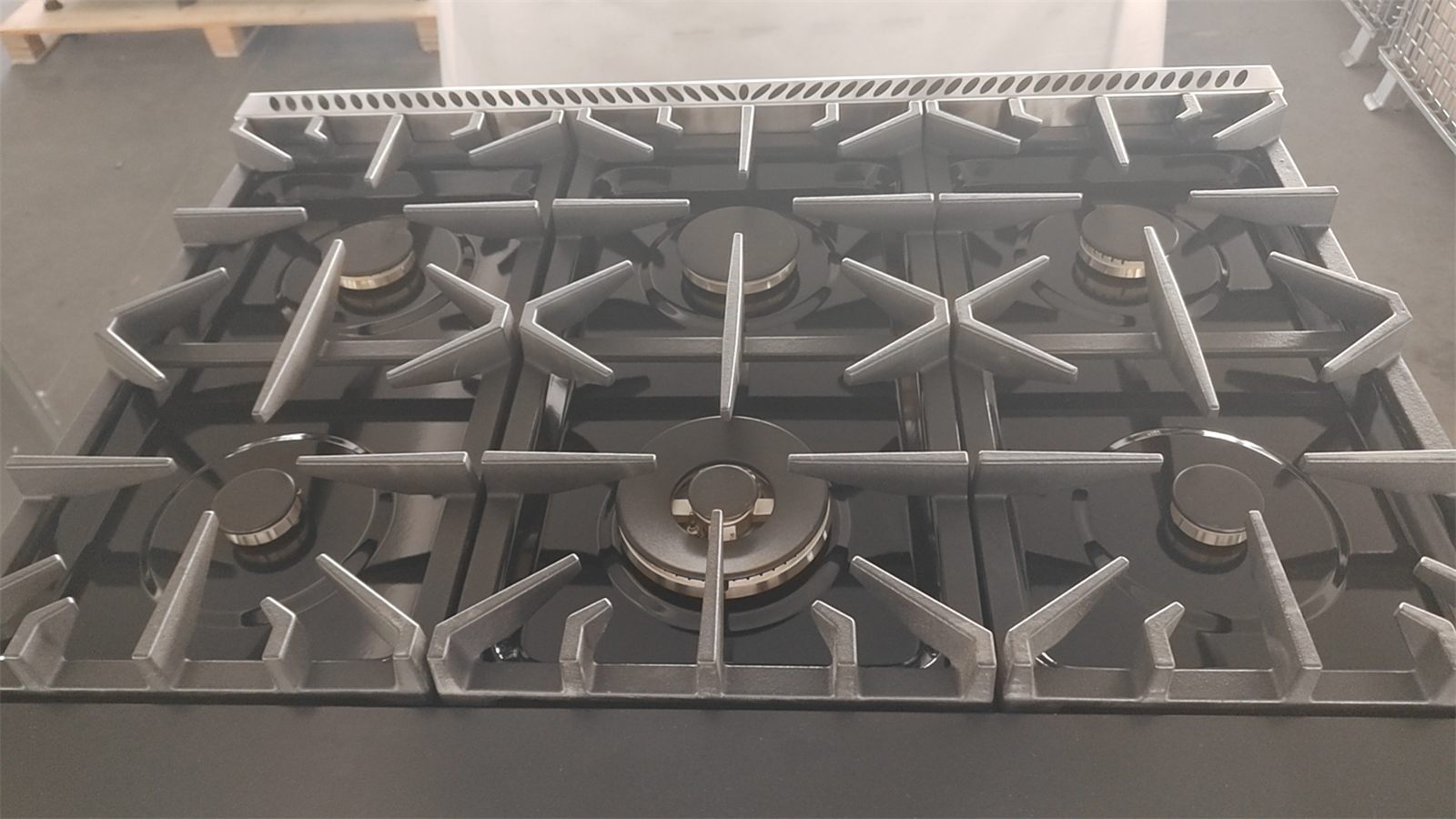
Short answer: a private label programme is mostly about deciding what not to change. The body, burner platform and oven cavity stay fixed; the badge, colour, control panel, cavity options, packaging and documentation change. That is what keeps a first order of 60 units and a repeat order of 400 units on the same tooling, and why the sample you approve is built on the same line as the shipment.
Private label fails in one place: the gap between the sample and the production run. A programme is worth signing only when the sample is built on the same platform, with the same burner, cavity and cabinet as the batch that follows it.
We run OEM and ODM work on one platform from 24 to 48 inches - full gas stainless, full gas enamel, dual fuel and induction. For an OEM gas range manufacturer, that is the whole point: a buyer can start with 36 inches and add 30 or 48 inch bodies later without a second tooling budget or a second spare-parts list.
Four steps. The enquiry fixes market, width, certification target and volume. The sample confirms the configuration on a physical unit: colour and finish, knob material, grate layout, badge and label, packaging print, manual language, gas type, regulator and electrical rating. Production locks that specification and runs the batch. Inspection function-tests every unit before packing.
What is locked at sample is deliberately narrow and written down: width, colour, knob and handle, grate layout, badge, carton and manual, certification files. What stays open is commercial - quantity, delivery schedule, container composition - because those change every season and should not change the product.
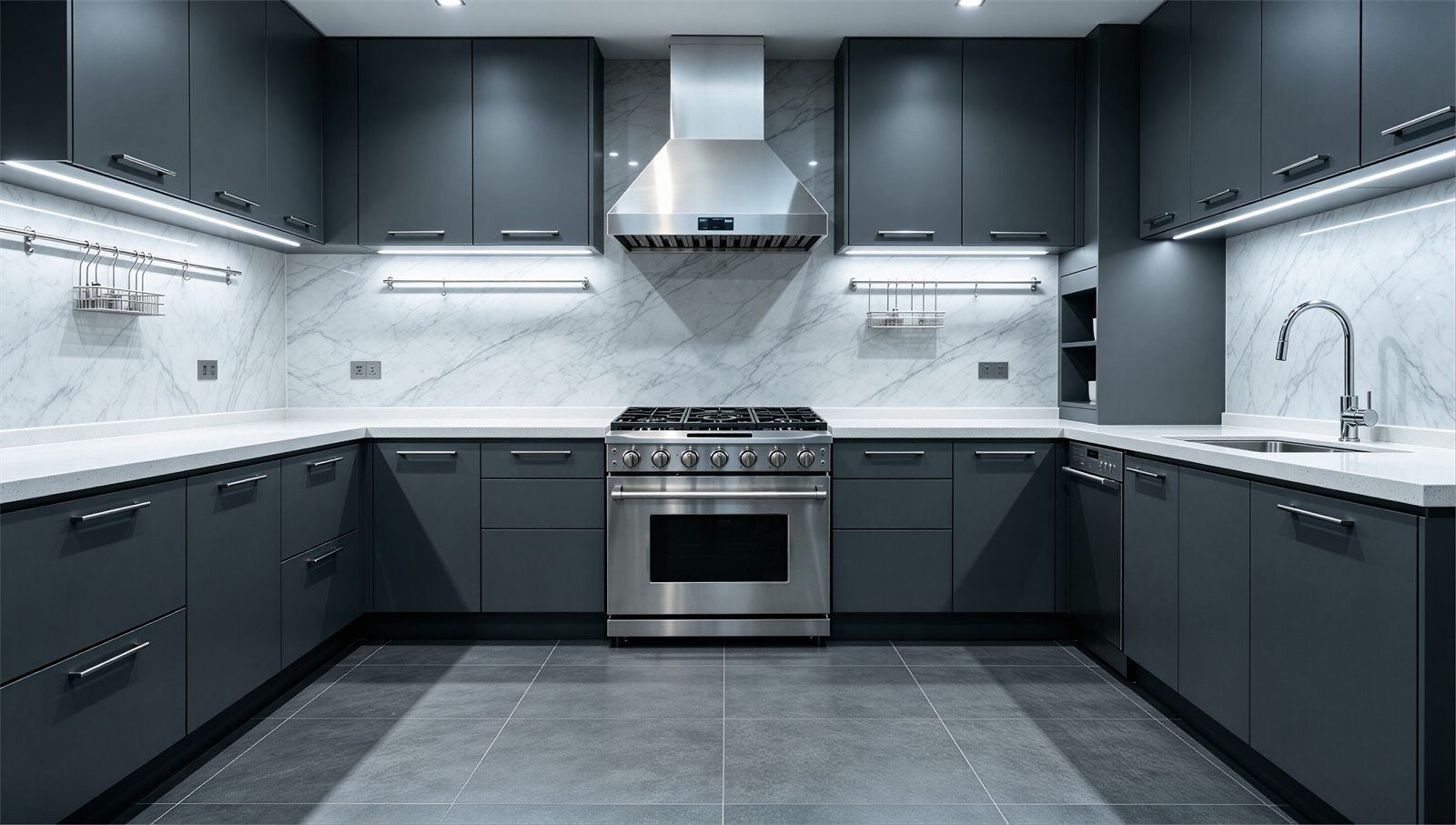
Limits we state plainly: a mixed 40HQ takes longer to build than a single-model container, trial quantities are quoted per configuration rather than from a price list, and certification in the brand owner's name depends on the scheme and on the test reports already held. If a supplier promises all three without conditions, ask to see the file.
This suits distributors adding a range line, developers specifying a kitchen package, and private label kitchen appliances brands that own a badge and a channel but no factory. Full process is on the OEM page; the models that can carry your badge are on the product pages. As an OEM gas range manufacturer, we would rather send a specification sheet than a glossy brochure.
What a buyer can hold us to: the sample is built on the production platform, the locked specification sheet is signed before the batch runs, every unit is function-tested, and the file that ships carries test reports, declaration of conformity, part numbers and the 40HQ loading plan. Where a request goes beyond the platform, we say so and propose what is possible.
Where a factory earns its keep is in the parts that are easy to promise and hard to deliver: a written configuration with carton dimensions and container quantity, a functional test on every unit, and the package that travels with the goods — test report, declaration of conformity, spare-parts list and loading plan. Beyond the appliance itself, we also consolidate procurement for buyers who need hoods, hobs, ovens and sinks in the same container, so one specification sheet covers the kitchen rather than four separate ones that later fail to fit together.
Practical note: when comparing an OEM gas range manufacturer, ask which platform the sample comes from. For private label kitchen appliances, the useful test is whether the same private label kitchen appliances line can add a 48 inch body next season without new tooling.